
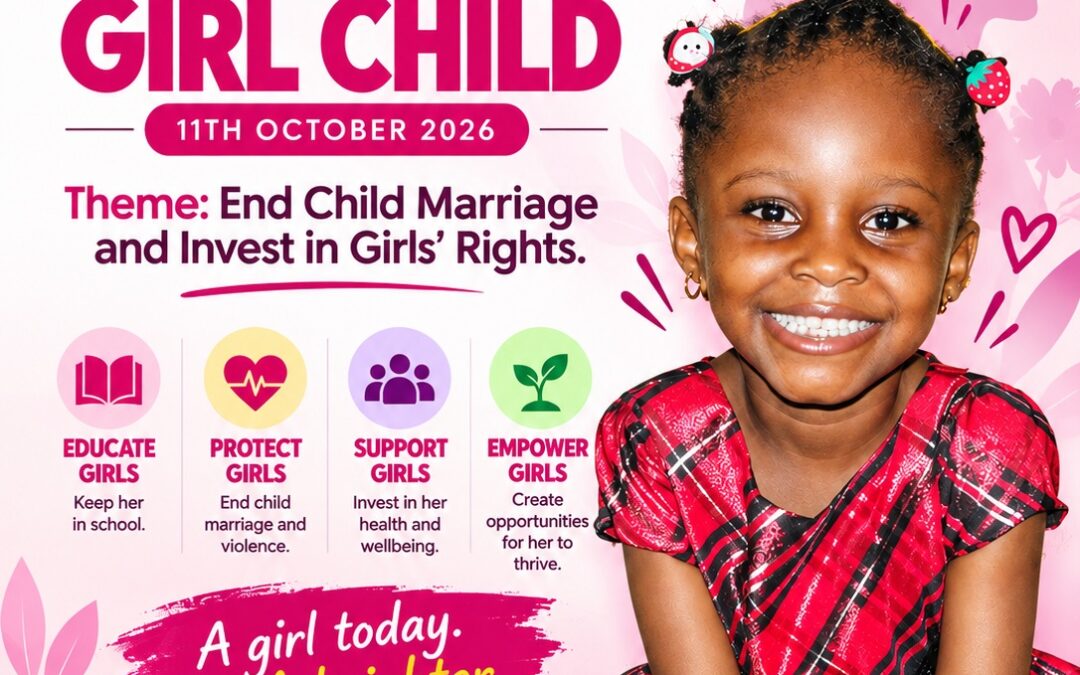
Every girl deserves a childhood free from fear, access to quality education and healthcare, protection from violence, and the opportunity to determine her own future. Yet, for millions of girls around the world, child marriage continues to threaten these fundamental rights and limit their opportunities.
As the global community commemorates the International Day of the Girl Child on 11 October 2026, the Centre for Comprehensive Promotion of Reproductive Health (CCPRH) joins the global call to end child marriage and invest in girls’ rights.
According to UNICEF’s 2026 estimates, approximately one in five girls worldwide is married before the age of 18, representing about 650 million women and girls alive today who were married during childhood. Each year, more than 12 million girls are married before reaching adulthood.
These figures represent more than statistics. They reflect interrupted education, restricted choices, increased vulnerability to violence, and significant risks to girls’ health and wellbeing.
Why Ending Child Marriage Matters
Child marriage is a violation of children’s rights. It can interrupt education, limit future economic opportunities, expose girls to early pregnancy and related health risks, and increase their vulnerability to gender-based violence.
Poverty, gender inequality, harmful social norms, insecurity and inadequate access to education and protection services can further increase the risk of child marriage.
Ending this practice requires more than awareness campaigns. It demands sustained investment in girls, stronger protection systems, effective laws and policies, and meaningful engagement with the families and communities whose decisions influence girls’ lives.
Investing in Girls’ Rights Means Investing in Their Future
Investing in girls goes beyond preventing early marriage. It means creating an environment in which every girl can exercise her rights, develop her abilities and participate meaningfully in decisions affecting her future.
This requires deliberate action in several areas:
Education: Keep girls in school and provide opportunities for them to complete their education and pursue their ambitions.
Health and wellbeing: Ensure access to appropriate, adolescent-friendly health information and services, including sexual and reproductive healthcare.
Safety and protection: Strengthen systems that prevent and respond to child marriage, gender-based violence, female genital mutilation and other harmful practices.
Voice and leadership: Ensure girls can express their views and participate meaningfully in decisions that affect their lives.
Skills and opportunities: Expand access to mentorship, life skills, digital literacy and opportunities for personal development and economic empowerment.
UNFPA emphasises that sustained investment in education, health and social protection is essential to addressing the drivers of child marriage. These investments help strengthen girls’ agency, expand their choices and challenge the inequalities that allow the practice to persist.
Everyone Has a Role to Play
Ending child marriage is a shared responsibility.
Governments must strengthen and implement protective laws and policies and adequately fund programmes that advance girls’ rights. Parents and caregivers must support girls’ education and aspirations. Traditional and religious leaders can help challenge harmful social norms and promote positive community practices.
Schools, health workers, civil society organisations and development partners must work together to ensure that girls at risk are identified, supported and protected. Boys and men also have an important role in challenging gender discrimination, rejecting violence and promoting respectful relationships.
Most importantly, girls must not be treated merely as beneficiaries of programmes. Their voices, experiences and priorities must inform the decisions, policies and investments that shape their lives.
CCPRH’s Call to Action
The Centre for Comprehensive Promotion of Reproductive Health (CCPRH) calls on governments, community leaders, parents, young people, development partners and other stakeholders to renew their commitment to ending child marriage and advancing girls’ rights.
We must move beyond commitments to sustained action: keep girls in school, strengthen child protection and health services, challenge harmful practices, support families and communities, and invest in opportunities that enable girls to thrive.
Every girl deserves the freedom to learn, grow, make informed choices and shape her own future.
This International Day of the Girl Child, let us stand with girls, defend their rights and invest in a future where no girl is denied her childhood or potential because she is a girl.
End child marriage. Invest in girls’ rights. Empower every girl to thrive.
References
- UNICEF. International Day of the Girl 2026.
- UNFPA. International Day of the Girl Child 2026.
- UNFPA Nigeria. Child Marriage.