
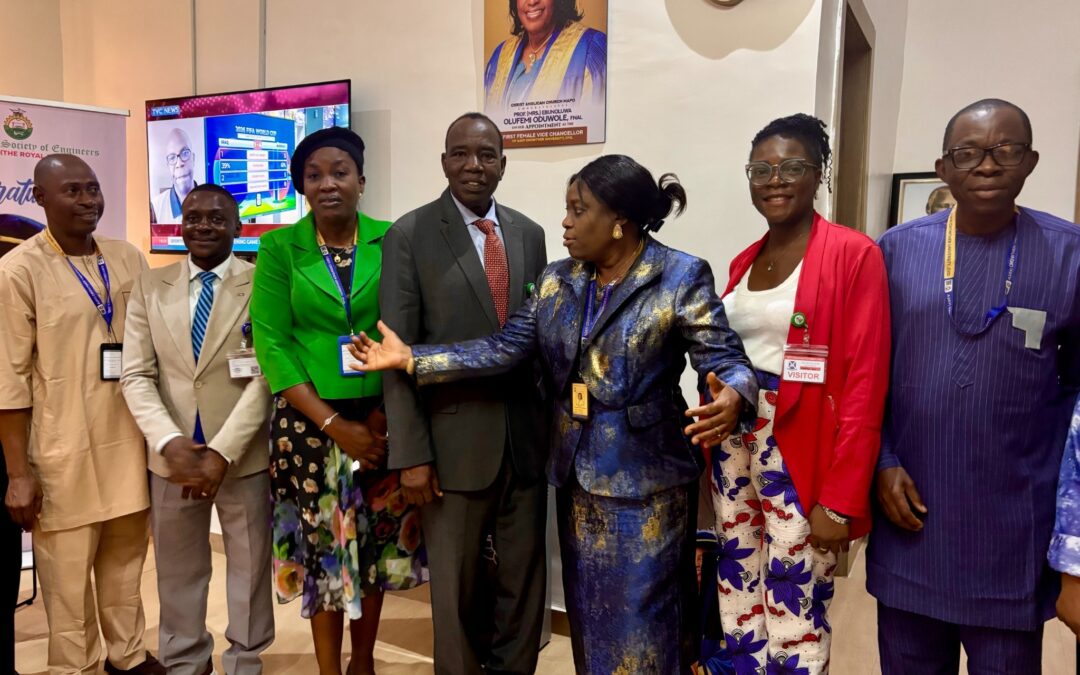
The Center for Comprehensive Promotion of Reproductive Health (CCPRH), with support from the United Nations Population Fund (UNFPA) under the UNFPA–UNICEF Joint Programme on the Elimination of Female Genital Mutilation, has taken an important step towards strengthening FGM prevention education within tertiary institutions in Southwest Nigeria.
In June 2026, CCPRH engaged selected universities across Oyo, Osun, Ondo and Ekiti States to promote the inclusion of structured education on Female Genital Mutilation within their undergraduate learning programmes.
The engagement involved university leadership, management representatives and members of General Studies curriculum development committees. Discussions focused on the burden and consequences of FGM, the role of tertiary institutions in transforming harmful social norms, and the importance of equipping students with accurate information on human rights, gender equality, reproductive health and relevant legal frameworks.
As part of the engagement, CCPRH shared a draft FGM curriculum module with participating institutions for technical review and contextual adaptation. The module covers the epidemiology and forms of FGM, health and psychosocial consequences, human rights implications, applicable laws and policies, communication approaches, and pathways for prevention and response.
Institutions were encouraged to determine the most appropriate approach for delivering the content within their academic structures. While some institutions expressed interest in integrating the material into their General Studies curricula, others indicated a preference for delivering the content through structured seminars or related student learning activities.
The engagement generated considerable institutional interest and opened pathways for universities to strengthen students’ understanding of FGM and their role in preventing the practice. Institutions also commenced internal consultations to determine suitable processes for approval, adaptation, and delivery.
By introducing FGM education within tertiary institutions, universities can reach students across different disciplines and prepare future health professionals, educators, policymakers, community leaders and parents to challenge harmful practices and promote the rights and wellbeing of women and girls.
The initiative also creates opportunities for sustained education of successive cohorts of students. It expands responsibility for ending FGM beyond the health sector and positions tertiary institutions as long-term partners in social and behavioural change.
CCPRH will continue to engage with participating institutions and provide the technical support required to adapt and deliver the content in ways that align with their academic policies and institutional structures.
This intervention contributes to Sustainable Development Goal Target 5.3, which calls for the elimination of harmful practices, including Female Genital Mutilation.
The current advertisement for data collectors is not going through one can’t have access to the link
Kindly apply via the website –ccprh-job-openings