Humanitarian Response in Northern Nigeria
Humanitarian Response in Northern Nigeria
Implemented a range of lifesaving and resilience-building interventions across conflict-affected regions in Northern Nigeria, particularly in Borno, Adamawa, and Yobe states. These interventions addressed the urgent needs of women, girls, and youth through integrated Sexual and Reproductive Health (SRH), Gender-Based Violence (GBV) response services, health systems strengthening, and socio-economic empowerment programs.
Integrated SRH/GBV Services in Safe Spaces
Women and Girls’ Integrated Safe Spaces serve as critical entry points for displaced and crisis-affected women and girls to access survivor-centered GBV response services, SRH counseling, family planning, clinical management of rape (CMR), antenatal care, skilled birth attendance referrals, and psychosocial support. Since the project’s inception, more than 500,000 women and girls have accessed these essential services, both in fixed service points and through community outreach campaigns in Borno and Yobe states.
Youth-Friendly Safe Spaces
Establishment of Youth-Friendly Safe Spaces to provide safe, supportive environments where youth can access accurate SRH information, participate in peer education programs, and engage in recreational and life-skills activities, offering psychosocial support and promoting positive youth engagement, resilience, and informed health-seeking behaviors.
Health Systems Strengthening and Clinical Capacity Building
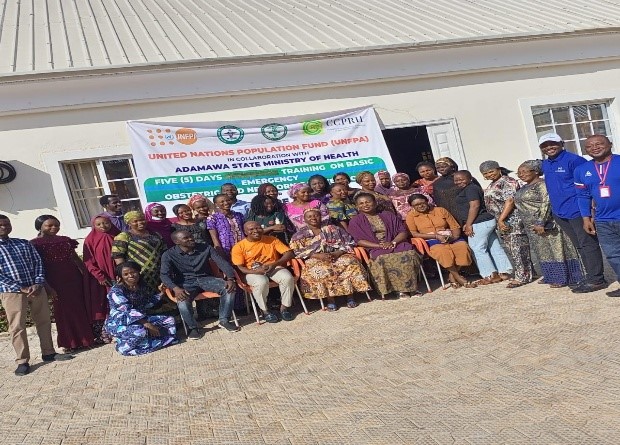
Implemented extensive health systems strengthening activities to ensure sustainability and quality of care. Over 1,000 healthcare providers have been trained across various life-saving domains, including Clinical Management of Rape (CMR), Minimum Initial Service Package (MISP) for reproductive health in emergencies, Basic Emergency Obstetric and Newborn Care (BEmONC), and obstetric fistula repair. A key highlight of this effort is the specialized training of 50 members of interdisciplinary obstetric fistula repair teams across Borno, Adamawa, and Yobe states. As a result, approximately 60 women previously deemed untreatable due to complicated obstetric fistula cases have successfully undergone surgical repair and rehabilitation.
Skills Acquisition and Economic Empowerment for GBV Survivors
Through targeted skills acquisition programs, over 50,000 women have been trained in vocational skills such as tailoring, bag making, soap and cream production, and cap making. To promote economic independence and sustained recovery, around 400 survivors have been empowered with start-up kits and small-scale business support, enabling them to regain agency and rebuild their livelihoods.
Evidence-Based Programming through Assessments
Grounded in data and evidence, driven by baseline and follow-up assessments on SRH, GBV, and nutrition, we conducted a comprehensive Sexual and Gender-Based Violence (SGBV) assessment in 2024 as a response to the ongoing insurgency and the geographic spread of the crisis into the North Central and Northwest zones. The assessment, covering Adamawa, Benue, Borno, Katsina, Plateau, Sokoto, Yobe, and Zamfara states, evaluated healthcare facility capacity, service availability, and infrastructure gaps. The assessment also aimed to establish the current status of SGBV across the regions and, evaluate access to essential services for survivors. Findings from this study are being used to guide programmatic adjustments and inform advocacy and coordination efforts in the expanded operational areas.
Strengthening RMNH Competencies and BEmONC Service Provision using the Hub-and-Spoke Model
We provided a critical lifeline for women at risk of maternal mortality, utilizing an adapted hub-and-spoke model, the project strengthened RMNH competencies among frontline health workers through targeted training and mentorship in Basic Emergency Obstetric and Newborn Care (BEmONC). This capacity-building effort was paired with the introduction of essential, life-saving interventions, including the use of misoprostol for the prevention and management of postpartum hemorrhage, magnesium sulphate for the management of pre-eclampsia/eclampsia, and the non-pneumatic anti-shock garment (NASG) for emergency stabilization of obstetric hemorrhage. Reduction of maternal mortality in 105 supported health facilities from 880 to 443 deaths per 100,000 live births demonstrating the transformative impact of equipping health systems with the right tools, skills, and support.
Summary
| Project Title | Location | Timeline | Focus Area & Summary | Key Achievements |
| UNFPA–UNICEF Joint Programme on FGM Elimination | Ekiti, Osun, Imo, Ebonyi, Oyo States | 2018 – Present | Strengthening health systems to prevent and manage complications from FGM through training, awareness, and policy advocacy. | – 740 health workers trained across 389 facilities- 34,015 FGM cases identified- 439,344 individuals reached with prevention messages |
| UNFPA SRH/GBV Humanitarian Response | Borno, Adamawa, Yobe, and others | Ongoing |
Provides lifesaving SRH and GBV services through safe spaces, training, and community outreach in conflict zones.
Strengthening RMNH and BEmONC (Hub-and-Spoke Model) Builds frontline worker capacity on emergency maternal care using a scalable hub-and-spoke model. |
– 500,000+ women and girls reached- 1,000+ healthcare providers trained- 60 successful fistula repairs- 50,000+ women received vocational training
– Reduction in maternal mortality from 880 to 443 deaths/100,000- Misoprostol, MgSO₄, NASG introduced in 105 health facilities |
| Project Title | Location | Timeline | Focus Area & Summary | Key Achievements |
| USAID Health Workforce Management (HWM) | Kebbi, Sokoto, Bauchi, Ebonyi, FCT | 2023–2024 | Institutional strengthening of 43 PSHTIs through ISP workshops to improve training quality and sustainability. | – ISP workshops held across 5 states- Enhanced curriculum monitoring, tutor support, and resource mobilization |
| USAID IHP Maternal & Newborn Health (MNH) | Bauchi, Kebbi, Sokoto | 2020–2021 | On-site LDHF training of HCWs in ANC, PPH, PE/E, and newborn care to improve MNH outcomes. | – 3,297 HCWs trained in 848 PHCs- Strengthened service quality, documentation, and community engagement |
| USAID IHP GBV Project | Bauchi, Sokoto, FCT | 2021–2022 | Built PHC capacity to respond to GBV using LIVES and national protocols, improving referrals and data use. | – 1,301 HCWs trained- 2,500+ GBV cases documented- 2,000+ survivors received care |
| USAID IHP PPMV/CP Childhood Illness & FP Project | Bauchi State | 2022–2023 | Enhanced PPMVs and CPs’ ability to manage childhood illnesses and deliver FP services using a cascade training model. | – 412 providers trained- 29,485 diarrhea cases treated- 20,492 FP clients reached |
| MOMENTUM Safe Surgery in Family Planning & Obstetrics (MSSFPO) | Sokoto, Kebbi, Bauchi, Ebonyi, FCT | 2022–2023 | Strengthened interdisciplinary surgical teams to provide holistic fistula care and surgical repair services. | – 235 HCWs trained- 141 repairs conducted- Advanced training for 6 surgeons |
Gallery
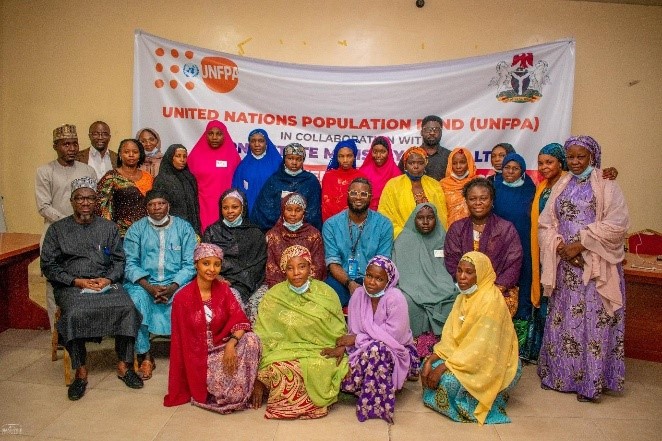
UNFPA sponsored training programme on BEmONC in Maiduguri Borno State